The Dinner Table Standard: The Question We Ask Before Every Vote in Washington
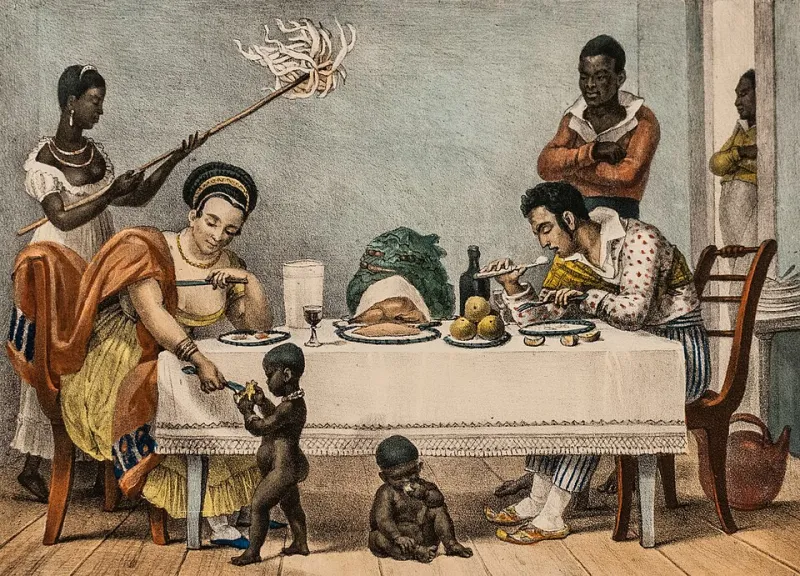
Photo: Jean-Baptiste Debret, Public domain, via Wikimedia Commons
Washington has a way of making simple things complicated. A bill comes with a thousand-page text, a congressional budget office score, a floor vote scheduled at midnight, and a press conference full of talking points. By the time the average family hears about it, the policy has been wrapped in so much jargon that nobody can tell whether it helps them or hurts them.
We believe there is a better filter — one that doesn't require a law degree or a lobbyist's briefing book. We call it the dinner table test. Before we take a position on any major piece of legislation, we ask a plain question: Would this policy hold up at a family dinner table back home? Would a working father, a retired schoolteacher, or a young couple starting out hear our explanation and nod their heads, or would they shake them?
It sounds old-fashioned. It is. And over the past several months of town halls, church basement meetings, and coffee shop visits across the district, that single question has shaped our positions on three issues headed back before Congress: healthcare costs, rural broadband, and agricultural policy.
Healthcare: What a Nurse in Scrubs Told Us
At a town hall last spring, a nurse with twenty years at the regional hospital stood up and described a conversation she'd had with her own mother — a widow choosing between a prescription refill and the electric bill. Nobody in that room needed a CBO score to understand the problem. Healthcare costs in this country have outpaced paychecks for a generation, and families are making impossible choices in silence.
The dinner table test rejects both of the easy answers Washington likes to offer. It rejects the progressive push toward a single government monopoly on health insurance, because families at that table know that when Washington runs something exclusively, quality falls and waiting lists grow. But it equally rejects the pretend-conservatism that shrugs at hospital consolidation and pharmacy benefit middlemen while premiums climb.
Our position, built from those conversations: increase price transparency so patients can see costs before they're billed, allow association health plans so small businesses and self-employed neighbors can pool risk, speed generic drug approvals, and cap surprise out-of-network billing. Every element of that agenda can be explained in one sentence at a kitchen table. That is not an accident. It is the standard.
Rural Broadband: A Homework Assignment in a Parking Lot
Not long ago, a constituent showed us a photograph that has stayed with us: her son sitting in the family truck in a fast-food parking lot after dark, finishing his homework on the restaurant's Wi-Fi because the broadband connection at their house couldn't carry it. That is not a rural inconvenience. In 2026, that is a barrier to opportunity — for students, for telehealth patients, for the farmer trying to monitor equipment or file a market report.
Here again, the dinner table test cuts through the noise. Families don't argue about whether broadband matters; they argue about why it still isn't there after the federal government has spent billions promising it. Our answer is accountability as much as expansion. We support directing remaining broadband funds toward last-mile deployment in genuinely unserved areas, streamlining the permitting that delays tower and fiber construction by years, and blocking the trend of overregulation that treats every rural pole as a federal project. We do not support blank checks to agencies that measure success in dollars obligated rather than homes connected.
When we explain that position at a dinner table — finish the job, cut the red tape, and count the houses actually hooked up — people understand it immediately. So should Congress.
Agriculture: The Table Where the Test Begins
There is a special irony in applying a dinner table test to farm policy, because every dinner table in America begins in the fields of places like this district. The growers and ranchers we've met with this year don't ask for sympathy; they ask for a fair shot. They're competing against foreign producers who operate under different environmental rules, different labor standards, and different subsidy regimes — and against a federal estate tax that can force a family to sell the operation their grandparents built just to settle the bill.
Our position is straightforward. A five-year farm bill should provide a genuine safety net for times of genuine disaster — not permanent dependence, and not neglect. It should fully fund crop insurance, expand trade promotion so our harvests reach customers overseas, and exempt family farms and ranches from the death tax so that a succession plan never has to include an auctioneer. When we explain that at the table, the farmer's spouse nods first. They've lived the volatility.
A Standard Worth Keeping
Some consultants will tell you that simple explanations are a liability — that voters reward complexity dressed up as expertise. We disagree. The dinner table test is not a slogan; it is a discipline. It forces us to listen before we legislate, to explain before we vote, and to answer for every position in plain English to the people who sent us there.
Healthcare costs, rural broadband, and farm policy will each come before Congress again, likely sooner rather than later. When they do, our votes will be cast with that table in mind — the same table where your family discusses the budget, the doctor's bill, and the future. If a policy can't survive that conversation, it doesn't deserve a vote.
That is the standard. We intend to keep it.