Saturday Mornings and Market Receipts: Where Food Policy Meets the Shopping Cart
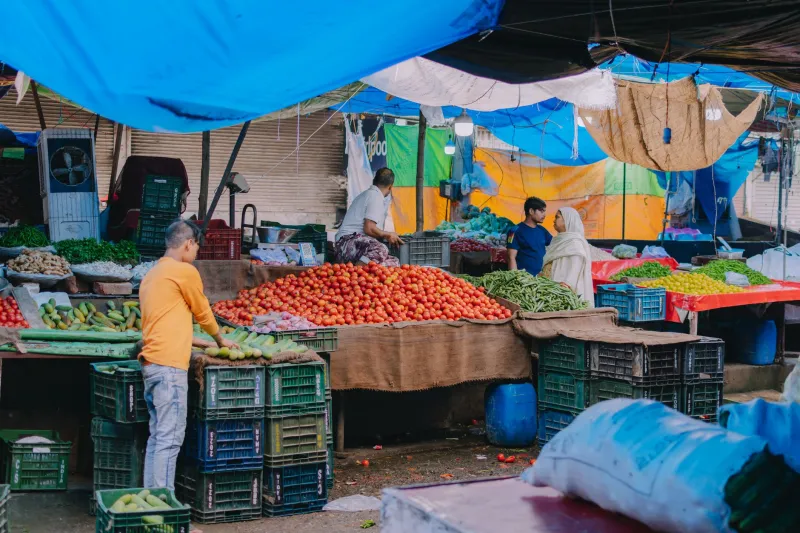
There is a ritual that plays out every Saturday morning in communities across this district. By seven o'clock, the parking lots near our farmers markets begin to fill. By eight, the stalls are crowded with families comparing prices, weighing produce, and doing quiet arithmetic in their heads before deciding what stays in the cart and what goes back on the shelf.
Last weekend, I did what every Member of Congress ought to do before voting on an agriculture or food policy bill: I brought my own reusable bags, a modest budget, and a shopping list, and I shopped where my constituents shop.
The Receipt as a Report Card
The farmers market is not a focus group. Nobody there is paid to have an opinion, and nobody softens their language for a politician's benefit. What you get instead is unvarnished economics. A dozen eggs at a price that makes a shopper wince. Honey priced against imported alternatives that undercut our local beekeepers. Stone fruit so good it sells itself — until the conversation turns to water allocations and labor costs that pushed the grower's price up two seasons running.
One vendor, a third-generation dairy farmer, put it plainly: "Folks aren't buying less because they want less. They're buying less because they have to." That single sentence captures what a season of federal food-price data tries to obscure. Grocery inflation is not an abstraction on a chart in Washington. It is the difference between a full cart and a carefully edited one.
What Washington's Choices Look Like Up Close
Standing at these stalls, three strands of federal policy become impossible to ignore.
First, the subsidy structure. Federal farm programs were built to stabilize staples, and stabilization has its place. But the current architecture too often channels support toward large commodity operations while the diversified growers who supply our markets — the ones selling the tomatoes, the greens, the free-range eggs — navigate federal programs built for someone else. When I review the farm bill, I ask a simple question: does this help the family standing in front of me, or the spreadsheet in front of the committee?
Second, the cost of regulation. Every rule that adds a step between field and market adds a dollar to the price tag. Water policy is the clearest example in our district. When federal agencies restrict storage, pumping, and delivery in the name of priorities that never seem to include the farmer, the result is fallowed acreage and higher prices at every table in the region. The shopper paying more for almonds and produce is paying a tax they never voted on.
Third, trade policy that forgets the producer. Tariffs, quotas, and trade agreements reach all the way into the shopping cart. When foreign competitors operate under environmental and labor standards our own producers would never be permitted to relax, we have not created a level playing field — we have created a system that penalizes the honest and rewards the absent. Our growers can compete with anyone. They cannot compete with a rulebook rigged against them.
A Modest Proposal: The Shopping-Cart Standard
Here is a suggestion I have made to colleagues on both sides of the aisle, and I will keep making it: before any Member votes on a major agriculture, nutrition, or food-safety bill, that Member should spend a Saturday doing their own shopping — not at a Capitol Hill specialty grocer, but at a market in a district like ours, on a budget a median-income family would recognize.
Call it the shopping-cart standard. It would not replace hearings, briefings, or data. It would simply anchor them. Policy written by people who have recently felt the weight of a grocery receipt is policy written with a different kind of humility.
What This Means for Our District
My legislative record reflects the convictions I heard at those stalls: protect our water rights and expand storage so our growers are never rationed into ruin; reform farm programs so diversified, family-scale operations can actually access them; and pursue trade enforcement that puts American producers first, not last.
But a record is not a monument — it is a work in progress, and it needs reinforcements. The volunteers who staff our campaign booths at these very markets, the neighbors who host coffees, the supporters who give what they can: every one of them extends the reach of these arguments into Washington.
So the next time you are at the market, look at your cart. Every item in it tells a story about a vote taken somewhere. Let's make sure the people taking those votes understand the ending.