Seven Decisions Coming Before Congress That Will Shape Our District's Future
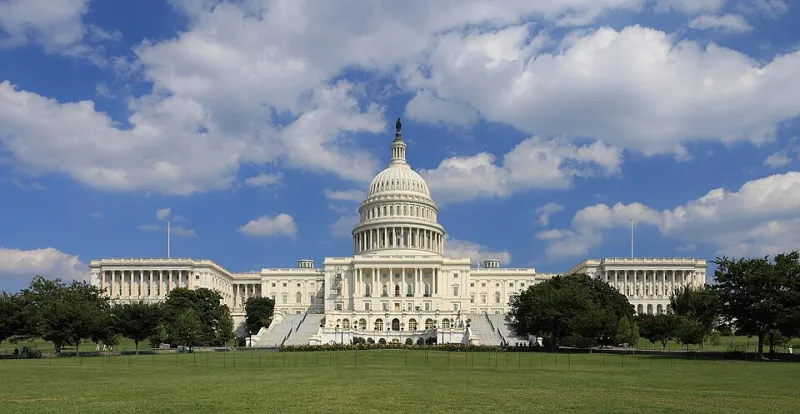
Photo: Martin Falbisoner, CC BY-SA 3.0, via Wikimedia Commons
It is a common complaint: Congress feels far away, and the issues debated on the floor of the House seem disconnected from life in our district. Nothing could be further from the truth. The votes cast in the next Congress will reach into our farms, our small businesses, our water taps, and our paychecks. Below are seven of the most consequential issues on the horizon — what each one actually means, and where Tom McClintock stands.
1. Water Infrastructure and Storage
The issue: Western water policy determines who gets water, when, and at what cost. Aging reservoirs, regulatory restrictions on water delivery, and stalled storage projects have left agriculture and communities vulnerable to drought cycles.
Where McClintock stands: Tom has been one of Congress's most consistent advocates for expanding surface storage and reforming the regulatory regimes that divert water away from farms and communities. He supports streamlining permitting for new reservoirs and groundwater recharge projects. Water is not an abstraction here — it is the foundation of the district's economy.
2. Agriculture and Farm Labor Policy
The issue: Federal labor rules, visa programs, and trade policy directly affect whether our growers can compete. An unreliable labor supply or punitive tariffs on exports can turn a profitable season into a devastating one.
Where McClintock stands: Tom supports a workable, lawful agricultural guest-worker program that matches labor supply to harvest reality, and he opposes regulatory burdens that raise costs for family farms without corresponding environmental benefit.
3. Small Business Taxation
The issue: Proposals in Washington would raise taxes on pass-through entities — the sole proprietorships, partnerships, and S-corporations that constitute the vast majority of American small businesses.
Where McClintock stands: Tom opposes tax increases on pass-through businesses and has voted repeatedly to preserve lower rates and full expensing for capital investment. Most small businesses in this district are not corporations with lobbying shops; they are hardware stores and family operations that reinvest every dollar of relief.
4. Federal Land Management and Wildfire Policy
The issue: Decades of fire suppression combined with restrictions on forest management have left federal lands dangerously overgrown. Catastrophic wildfire is now the defining environmental threat to communities across the West.
Where McClintock stands: Tom has authored and supported legislation to expedite active forest management — thinning, prescribed burns, and timber harvests — on federal land. He has argued for years, against considerable resistance, that overgrown forests are not wilderness; they are fuel. Recent fire seasons have proven the point.
5. Energy Production and Utility Costs
The issue: Federal energy policy — permitting for power generation, transmission, and domestic resource development — drives the electricity and fuel prices every household pays.
Where McClintock stands: Tom supports an all-of-the-above energy strategy that includes domestic oil and gas production, hydropower, and nuclear energy, paired with permitting reform so that infrastructure can actually be built. Families should not choose between heating their homes and other necessities because of decisions made three thousand miles away.
6. Regulatory Relief for Job Creators
The issue: The Code of Federal Regulations runs to tens of thousands of pages, and compliance costs fall hardest on small employers who lack in-house legal departments.
Where McClintock stands: Tom supports the REINS Act concept — requiring congressional approval for major rules — and broader regulatory reform requiring agencies to count and offset the costs they impose. Accountability for unelected bureaucracies is a constitutional issue, not merely an economic one.
7. Federal Spending and the National Debt
The issue: Annual deficits now exceed a trillion dollars, and interest payments on the debt rival the entire defense budget. This is not a future problem; it is a present tax on every American through inflation and crowding out.
Where McClintock stands: Tom has spent his career voting against bloated appropriations bills and for balanced-budget amendments. He believes the duty to live within our means applies to Washington exactly as it does to every household in the district.
Why This List Matters
Each of these issues will come before the next Congress in one form or another. In each case, the choice will be between expanding federal control and expanding opportunity — between Washington's priorities and our district's. Tom McClintock's record offers forty years of evidence about how he will choose.
Voters deserve representatives who can explain not only what they believe, but why it matters at the kitchen table. We hope this guide helps make that connection clear — and that when you cast your ballot in 2026, you will do so knowing exactly what is at stake.