Follow the Money — Straight to the Doorsteps: How Every Contribution Works for the District
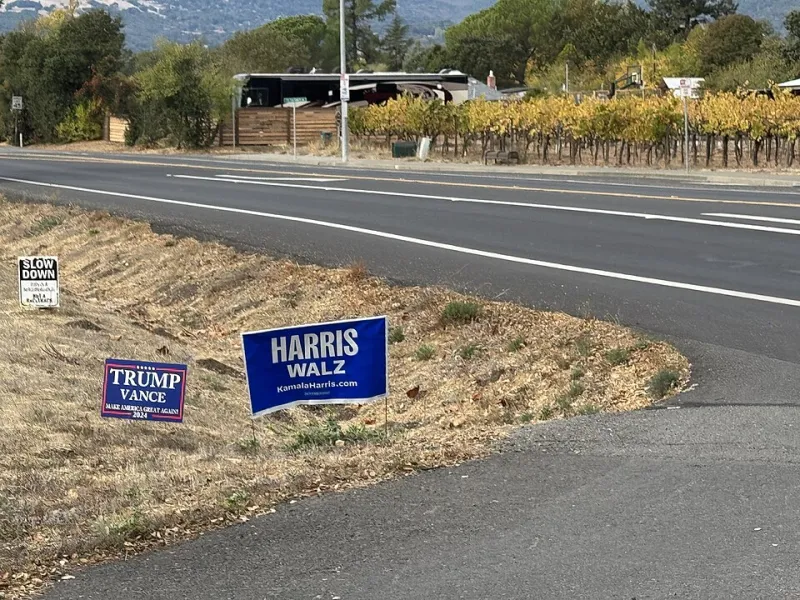
Photo: Missvain, CC0, via Wikimedia Commons
Trust is earned, not requested. That principle guides everything we do at McClintock for Congress, and it applies just as firmly to our fundraising as it does to our policy positions. When a supporter sends five dollars, fifty dollars, or five hundred, they are not merely funding a campaign — they are investing in a set of values and a vision for our district. They deserve to see precisely where that investment goes.
So today, we are opening the books. Below is a candid breakdown of how this campaign allocates its resources, why each line item matters, and how even the smallest recurring gift compounds into real electoral strength.
The Budget at a Glance
Campaign spending generally falls into four broad buckets, and ours is no exception: voter contact (yard signs, mail, canvassing supplies), paid outreach (digital and broadcast advertising), people (staff and field organizing), and compliance and operations (accounting, legal, and the unglamorous machinery that keeps a campaign lawful and honest).
Roughly speaking, our budget is allocated as follows: about 40 percent to voter contact and field operations, 35 percent to paid media, 15 percent to staff and organizing, and 10 percent to compliance, fundraising costs, and administration. Let's take each in turn.
Voter Contact: The Ground Game
Yard signs may seem like simple things — corrugated plastic, a wire stake, a printed name. But they accomplish something no advertisement can: they signal, block by block, that support for Tom McClintock runs deep and local. A lawn on Main Street is an endorsement from a neighbor, and neighbors carry more credibility than any television spot.
Beyond signage, this portion of the budget funds literature drops, walk packets, canvassing materials, and the infrastructure of door-knocking operations across the district. Studies of recent election cycles consistently show that face-to-face voter contact remains the single most persuasive form of outreach. Every dollar here pays for conversations — and conversations win elections.
Paid Media: Reaching Voters Where They Are
Not every voter can attend a town hall or answer the door. Digital advertising allows us to reach undecided constituents with Tom's actual record and positions, unfiltered by editorial spin. Our media spending is deliberately targeted: we concentrate on persuadable voters and low-propensity supporters, ensuring we are not wasting resources preaching to the converted.
A practical note: digital advertising offers something broadcast television cannot — precision and accountability. We can track which messages resonate, adjust in real time, and stretch each dollar further than campaigns of a generation ago could have imagined.
People: The Team Behind the Effort
Campaigns are built by people, and people must be paid. Modest salaries for field organizers and part-time staff keep experienced hands on deck through the long months of a campaign cycle. This is not extravagance; it is the difference between an operation that can coordinate five hundred volunteers and one that burns them out through disorganization.
Compliance: Doing It Right
Federal election law is exacting, and it should be. Roughly one dollar in ten goes toward accounting, legal review, and regulatory filings. This is the least glamorous line in the budget and among the most important. A campaign that cuts corners on compliance betrays the very standards it asks voters to endorse.
What Your Dollar Actually Buys
Consider the arithmetic of small gifts. A $5 monthly contribution — twelve dollars a year multiplied by fifty — becomes $600 annually. That covers the printing of dozens of yard signs, or a full day of digital advertising reaching thousands of district voters. A $25 gift funds a complete canvassing packet for a volunteer. A $100 contribution underwrites a weekend of door-knocking in a key precinct.
Scale works in both directions. Major contributions allow us to make strategic commitments — securing advertising inventory early, staffing field offices in every corner of the district — that small gifts alone cannot. Both matter. Both are used with the same discipline.
The Principle Behind the Practice
Tom McClintock has spent his career arguing that government should treat taxpayer money with respect and transparency. It would be incoherent for his campaign to do otherwise with voluntarily given funds. Every expenditure is reported to the Federal Election Commission and available for public inspection — and we welcome that scrutiny.
If you believe in limited government, fiscal discipline, and a representative who answers to the district rather than to Washington, we ask you to consider a contribution today. Whether it is five dollars or five hundred, you now know exactly where it goes: into the hands of neighbors, onto the doorsteps of voters, and toward a victory in 2026 that puts our district first.
Give what you can. We will show you what it does.