Cornerstones of the Commons: The Buildings Where Our District Becomes a Community
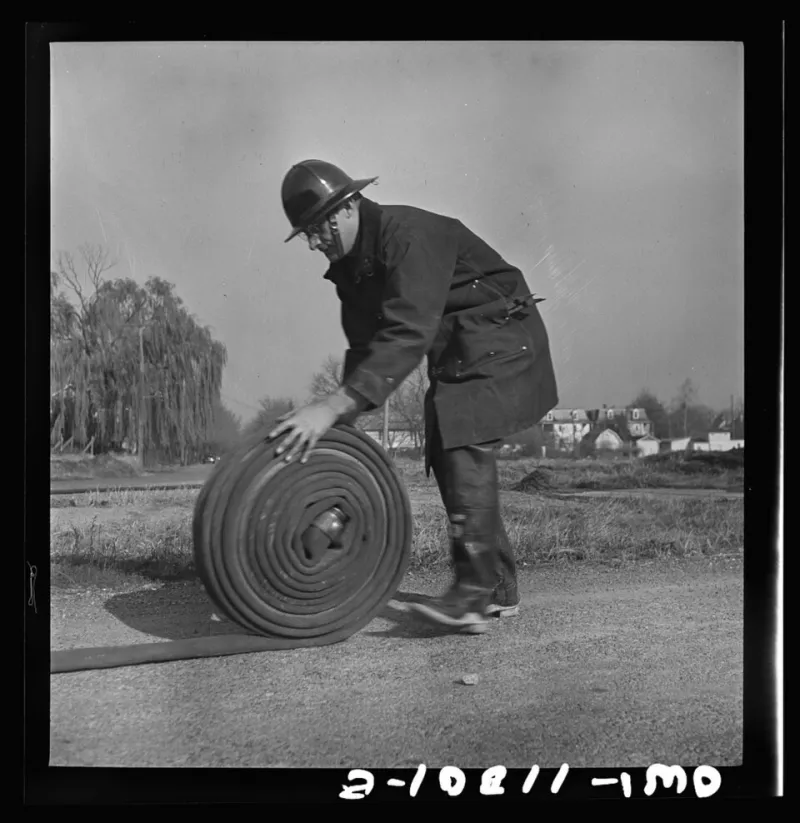
Photo: Marjory Collins, Public domain, via Wikimedia Commons
There is a particular kind of quiet that settles over a public library at ten in the morning. Not silence — quiet. The rustle of a newspaper, the hum of the photocopier, a retiree tutoring a high schooler over algebra at the corner table. It is the sound of a community doing its business with itself.
Over the past month, our campaign team loaded up a camera and a folding table and visited the civic landmarks that hold this district together: the libraries, the volunteer firehouses, the fairgrounds, the grange halls, the senior centers. We went to listen. We came back with photographs, certainly, but more importantly with a renewed conviction about why we're running — and why this election matters more than most people realize.
The Firehouse That Answers Before Anyone Calls
Start at Station 7, on the eastern edge of the district. The volunteer roster there has held steady at twenty-two for a decade, which sounds like stability until you learn the average age of those volunteers keeps creeping upward. The truck is a 2009. It runs. It will keep running. But federal Assistance to Firefighters grants — the kind decided by a subcommittee most voters have never heard of — determine whether Station 7 gets new self-contained breathing apparatus or waits another cycle.
When we talk about federal budgets on this campaign, this is what we mean. Not abstractions. Air packs. Turnout gear. A training trailer shared among four rural departments.
Where the Fairgrounds Earn Their Keep Eleven Months a Year
The county fairgrounds sit empty for exactly three weeks a year, the week after the fair. The rest of the time they host 4-H livestock clinics, the regional beekeepers' conference, a job fair that drew over a thousand attendees last spring, and the emergency shelter staging area the county relies on during wildfire season.
Fairground facilities qualify for a patchwork of federal grant programs — USDA community facility funding, FEMA mitigation dollars, economic development administration grants. Whether those programs survive a given appropriations cycle is, frankly, a coin flip depending on who holds the gavel. The fairground manager put it to us plainly: "We don't need a handout. We need the programs that exist to actually get funded on time."
That is a reasonable ask. It deserves a representative who treats it that way.
The Library Card as Civic Infrastructure
We set up our table outside the main branch on a Saturday and spoke with more than two hundred people. What struck us was not the volume but the variety: small business owners using the free meeting rooms, veterans navigating benefits paperwork with a librarian's help, parents at story hour who hadn't seen each other since the last one.
Institute of Museum and Library Services funding flows to our district through the state. It is a rounding error in Washington and a load-bearing wall here. We believe a government that can find billions for pet projects can find the fraction of a percent that keeps the doors open and the Wi-Fi on.
Won One Firehouse at a Time
Here is the political conclusion we drew, and we offer it without apology: campaigns are not won on television anymore, if they ever were. They are won one firehouse conversation at a time, one fairground handshake, one library table where a volunteer hands you a clipboard and asks what you actually plan to do.
The landmarks in this photo essay — and we hope you'll view the full gallery on our site — are not backdrops. They are the reason the federal decisions made three hundred miles away matter at all. A representative who doesn't know the name of the fire chief, the fairground manager, or the head librarian doesn't really know the district.
We intend to know all three. And we'd be honored to earn your vote in the process — starting at the next station open house, the next fair board meeting, the next quiet Saturday morning at the library.